Sunday, January 29, 2023

"The Stomp" by NYC Funk Band Mokaad

“The Stomp” by NYC funk band Mokaad is one of the funkiest tracks I've come across in a while. I heard it for the first time a few days ago while surfing Youtube and was completely blown away. The band ventures into some seriously funky territory on this cut. It’s refreshing to hear this type of raw, uncut funk from a group of talented young musicians. The super-funky track showcases the band’s insane musicianship. The bass work is absolutely filthy, and the horns fire hot blasts of furious funk. The drummer keeps the groove sizzling with some extra nasty beats, and the wicked rhythm guitar licks add some extra flavor to the track.

“The Stomp” is from Mokaad’s EP Booty, released on May 16, 2012. The six-song collection offers some of the baddest and most satisfying funk created by a millennial groove outfit that you'll ever hear. It’s a must-have for hardcore funk fans.

The players on Booty were bandleader Gabriel Garzón-Montano (composer, guitar, horn arrangements, lyricist, piano, rhythm arrangements and vocals); Spencer Murphy (bass, rhythm arrangements); David Frazier Jr. (drums, rhythm arrangements); Kevin Jacobi (alto sax); Davy Levitan (composer, guitar, lyricist and rhythm arrangements); Brandon Lewis (trumpet); Dominic Messana (harmonica, baritone sax); Jon Swift (keyboards) and Zach Koebar (tenor sax). Backing vocals were provided by George Ross, Le’asha Julius and Luna Garzón-Montano.

“The Stomp" was written by Gabriel Garzón-Montano, Spencer Murphy and Davy Levitan. Garzón-Montano produced the track as well as the entire Booty EP. The collection wasn’t released on a label.

Mokaad was formed in 2008 at SUNY Purchase by singer-songwriter/multi-instrumentalist Gabriel Garzón-Montano, Davy Levitan and other collaborators. The band broke up after a funky five-year run. 

Post-Mokaad, Gabriel Garzón-Montano’s solo career really started to gain some traction when he opened for Lenny Kravitz during the legendary artist’s 2014 European tour. And his career grew even more when Drake sampled his song “6 8” for the track “Jungle” from the double-platinum Grammy-nominated album If You’re Reading This It’s Too Late (2015). 

Garzón-Montano has released two full solo albums so far: Jardín (2017) and Agüita (2020). His debut solo collection was the 2014 EP Bishouné: Alma Del Huila. The artist’s eclectic sound encompasses R&B, soul, funk, alternative, urbano, hip hop, electronica, urban reggaeton, post-punk and folk.

In 2021, Garzón-Montano received the Libera Awards as Best Record 2021 for his album Agüita.


Here's another funky cut from the Booty EP: "Pussy Whip"
Sunday, January 15, 2023

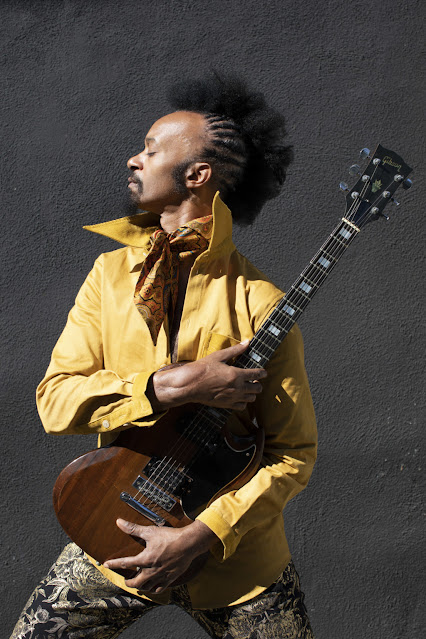
Fantastic Negrito Shakes Up Contemporary Blues Scene With His Singular Sound And Adventurous Spirit

Photo by Lyle Owerko
Oakland bluesman Fantastic Negrito is one of the most exciting and innovative artists on the contemporary blues scene. The singer-songwriter/musician’s uniquely powerful brand of blues and soul-stirring live performances have earned him a devoted international following. He has landed a slew of prestigious music awards, including three consecutive Grammy wins for Best Contemporary Blues Album–The Last Days of Oakland (2016), Please Don’t Be Dead (2018) and Have You Lost Your Mind Yet? (2020).

Negrito’s sound is a satisfying gumbo of blues, soul, funk, rock, gospel and folk. His music possesses a rawness and brutal honesty that evokes the work of seminal blues legends such as Robert Johnson, Lead Belly, Muddy Waters, Skip James and Howlin’ Wolf. And in the spirit of those blues titans, the themes in Negrito’s songs are often drawn from his own personal struggles, hardships and life lessons. His songs are deeply personal and confessional. He also takes on pressing social issues on his tracks.


With each new release, Negrito further pushes the boundaries of contemporary blues. This bold approach is apparent on his most recent effort White Jesus Black Problems, released on June 3, 2022. The “visual” concept album is the artist's most daring and ambitious work to date. Its theme focuses on a forbidden interracial romance that took place some 270 years ago. It’s based on the true story of Negrito's seventh-generation white Scottish grandmother (Elizabeth Betty Galimore), an indentured servant who was living in a common-law marriage with the artist’s seventh-generation grandfather (who he calls “Grandfather Courage”), an African-American slave. Their marital bond was in open defiance of the racist, separatist laws of 1750s colonial Virginia. Negrito honors their bravery and the powerful love that they shared for one another with this album.


Musically, White Jesus Black Problems is a wildly imaginative mélange of different styles, encompassing rock, funk, blues, gospel, country and even a bit of Motown. Listening to this album, you can’t help but be reminded of the adventurous sonic excursions of convention-flouting genre-bending artists like Prince, Sly Stone and Frank Zappa at their most inventive.


The album was met enthusiastically by fans and received high marks from critics. The song “Oh Betty” from the collection garnered Negrito a Grammy nomination for “Best American Roots Performance.” He wrote the song in honor of Elizabeth Betty Galimore.


Negrito’s journey to success was filled with setbacks, hard knocks, brief triumphs, a near-death experience and a musical rebirth. He was born Xavier Amin Dphrepaulezz on January 20, 1968 in Western Massachusetts; he was the eighth of 15 children. His Somali-Caribbean immigrant father was a strict and deeply religious Muslim. When Negrito was 12, his family relocated to Oakland, California. The young teen quickly got caught up in Oakland’s rough street life and began hustling and dealing drugs. At 18, Negrito experienced an epiphany when he heard Prince’s groundbreaking album Dirty Mind for the first time. The album inspired him to become a musician, which he also saw as a way to escape the streets.


Negrito had a rather unorthodox way of learning how to play. Posing as a student at UC Berkeley, he’d sneak into the music rooms and copy the music students as they practiced their scales. Negrito was a quick study and by the time he was 20, he had taught himself how to play numerous instruments, including guitar, banjo, mandolin and harmonica.


He began writing songs and performing around the Bay Area. Negrito decided it was time to get out of Oakland’s violent street life when an armed robber held a 9mm pistol to his head at a drug house. He hitchhiked to Los Angeles the very next day with a demo in his hand in hopes of landing a record deal. Once in L.A., the aspiring young artist began peddling his demo around town and eventually got a management deal with Prince’s former management company; this led to him signing a million-dollar record deal with Interscope Records. 


In 1996, he released his first album, The X Factor, under the mononym Xavier. The funk/neo-soul album was poorly received and failed to jumpstart his music career. The album’s poor showing shook the artist’s confidence, and he suffered a long creative block as a result.


Then on one fateful evening in 2000, a drunk driver ran a red light and slammed into Negrito’s car; the crash left him in a coma for three weeks with both of his arms and legs broken. It also mangled his strumming hand, which severely affected his ability to play the guitar. When he emerged from the coma, he was forced to undergo months of painful physical therapy to regain the use of his legs, as his muscles had atrophied while he was bedridden. He eventually regained the movement of his strumming hand, but it was never the same as it was prior to the accident.


Negrito has said in interviews that the crash “released” him, as he was already in a creative slump and thoroughly disillusioned with his record label at that point. When Interscope terminated his contract, Negrito returned to the hustling game. In 2008, he sold all of his music equipment, except one guitar, and moved back to Oakland where he sold marijuana and ran a series of underground nightclubs. 


The birth of his son in 2009 rekindled his passion for music. He would play his son the Beatles song “Across the Universe” on guitar to get him to sleep; this ignited the spark in him to return to music. However, his approach to making music was drastically different from what it had been before. Negrito was no longer trying to follow current music trends; he instead played what truly inspired and moved him. This approach freed him up to explore different musical ideas and styles, which led him back to the source of modern American music—the blues. And with this new sonic direction, the musician rechristened himself Fantastic Negrito. It was a musical and spiritual rebirth for the artist. He began doing shows around the Bay Area with his new stripped-down blues-based sound, which he has described as “black roots music for everyone.” The joy of performing and creating music had returned, and he soon gained a sizable following in the area.


Negrito’s music career really took off when he won National Public Radio’s inaugural Tiny Desk Concert Contest in 2015. His DIY video for his original song “Lost in a Crowd” beat out 7,000 other video entries. As a result, his fan base expanded exponentially, and he even gained some high-profile admirers, including late Soundgarden frontman Chris Cornell and U.S. Senator Bernie Sanders. Cornell invited Negrito to open for him on the European leg of his “Higher Truth” tour in 2016; and Sanders tapped him to perform at some of his 2016 presidential campaign events.


On June 3, 2016, Negrito released his album The Last Days of Oakland on his own indie label Blackball Universe. The album resonated with both blues fans and music critics due to its stunning originality and raw poetic power. It was truly a revelation and brought a fresh new energy to the modern blues scene. Seductive slide guitars; haunting, gospel-laced vocals; hot piano and stellar songwriting make this album a truly exhilarating listening experience. The collection earned Negrito a Grammy for Best Contemporary Blues Album at the 2017 Grammy Awards. It was his first of three consecutive Grammy wins in that category.


Now in 2023, Negrito’s star is shining brighter than ever. He continues to thrill appreciative fans around the world with his potent “black roots” sound and emotionally charged live performances. The artist recently announced his new album Grandfather Courage, which is an acoustic reimagining of White Jesus Black Problems. It’s set for release on February 3 on his own label Storefront Records.


Also, Negrito is set to kick off a European tour next month with dates lined up in the UK, Germany, France, Italy and the Netherlands. Visit his official website for more details.


Fantastic Negrito delivers a soul-wrenching acoustic performance of his songs "Rant Rushmore," "Lost In a Crowd" and "About a "Bird" in 2016 for Acoustic Guitar Magazine.


Official music video for the song "Trudoo" from the album White Jesus Black Problems


Fantastic Negrito's haunting rendition of folk classic "In The Pines" from The Last Days of Oakland


 Live performance of "Dark Windows" from album Please Don't Be Dead at Paste Studios in 2018


Wednesday, January 4, 2023

Anita Pointer, Founding Member of Iconic Vocal Group The Pointer Sisters, Dies at 74

Acclaimed singer, songwriter and performer Anita Pointer died on Saturday, December 31, at her home in Beverly Hills, where she was surrounded by family. She was 74. The cause of her death was cancer, according to her publicist, Roger Neal. She is survived by her sister Ruth, brothers Fritz and Aaron and granddaughter Roxie.

Anita was a founding member of the Grammy-winning R&B/pop vocal group the Pointer Sisters. From the late ‘70s to the mid-80s, the Pointer Sisters were one of the hottest music acts on the planet–landing a string of hits on both the R&B and pop charts. Anita sang lead on many of the group’s biggest hits, including “Yes We Can Can,” “Fire, “Slow Hand” and “I’m So Excited.” She blessed those tracks with her rich, soulful vocals. She was also a charismatic live performer and always brought tons of energy and excitement to the stage. 


The Pointer Sisters were known for their great versatility. Their eclectic sound encompassed a variety of genres, including jazz, pop, soul, country, funk, gospel, bebop, blues, disco, rock and electronic music. And they handled all these styles with equal facility. 


The group scored several gold and platinum albums and had 13 top-20 singles, seven of which landed in the top 10. They earned a slew of prestigious music awards, including three Grammys and three American Music Awards. They were inducted into both the NAACP Image Awards Hall of Fame and the Soul Train Hall of Fame in 1994 and also received a star on the Hollywood Walk of Fame that same year. Additionally, the group was inducted into the Vocal Group Hall of Fame in 2005.


The Pointer Sisters’ songs have been featured on the soundtracks of blockbuster films such as Beverly Hills Cop, Beverly Hills Cop II and The Nutty Professor. And they appeared in the 1976 cult comedy classic Car Wash in which they played the Wilson Sisters, who were faithful followers of a duplicitous fast-talking evangelist named Daddy Rich (played by Richard Pryor). They also appeared on the popular TV shows Gimme a Break and The Love Boat. Additionally, the Pointer Sisters toured for 48 weeks in a 1995-’96 production of the Tony-winning musical Ain't Misbehavin’.


Anita was born in Oakland, California on January 23, 1948 to Sarah Elizabeth and Reverend Elton Pointer. She was the second eldest of four sisters. Her sisters were Ruth, Bonnie and June. She also had two older brothers, Fritz and Aaron. All four sisters began singing gospel in their father's church in West Oakland. June and Bonnie formed a music duo in the late ‘60s called Pointers, a Pair. The two began performing at nightclubs around the San Francisco bay area. Their shows were well-received, and they began to build a following. By 1972, both Ruth and Anita had joined the group, making it a quartet. And they renamed themselves the Pointer Sisters.


The group released their self-titled debut album on Blue Thumb Records in 1973. The album was met enthusiastically by record buyers and music critics, who gave it high marks. The collection yielded two hits, “Yes We Can Can” and a cover of Willie Dixon’s “Wang Dang Doodle.” “Yes We Can Can,” written by legendary songwriter/producer/arranger Allen Toussaint, peaked at #11 on the Billboard Hot 100 and #12 on Billboard’s R&B singles chart. “Wang Dang Doodle” climbed to #61 on the Billboard Hot 100 and #24 on Billboard’s R&B singles chart. 


The group scored their second top-20 hit with the infectious country tune “Fairytale,” a single from their sophomore album That’s a Plenty (released in 1974 on Blue Thumb Records). The song, co-written by Anita and Bonnie, peaked at #13 on both the Billboard Hot 100 and Billboard’s Adult Contemporary singles chart. And it climbed to #37 on Billboard’s Hot Country Singles chart. On October 25, 1974, they performed “Fairytale” at the Grand Ole Opry, making them the first black female group to appear on the world-famous country music showcase. The song also earned the Pointer Sisters their first Grammy. They won for Best Country Vocal Performance by a Duo or Group at the 17th Annual Grammy Awards in 1975. They were the first African-American music act to win in that category. The song is a long-time favorite among country music fans. Elvis Presley even covered it.


The Pointer Sisters achieved their biggest commercial success in the ‘80s as a trio. (Bonnie left the group in 1977 to pursue a solo career.) They were racking up hit after hit in that decade and became a major force in popular music. Their music was heard everywhere during that period–on the radio, clubs, parties, wedding receptions and even at the movies. 


The Pointer Sisters were also great performers; their concerts were always exciting, high-energy celebrations where they always looked like they were having as much fun as the audience. And during their live performances, they showed that they were the real deal vocally. They sounded just as good as they did on their records live. They didn’t need any studio effects or tricks to sound amazing. 


Some of the group’s other career highlights included performing at the White House for then-president Bill Clinton and at the closing ceremony of the 1996 Olympics in Atlanta. The trio also participated in the recording of the all-star charity single “We Are The World” in 1985.


Anita was also involved in various music projects outside of the Pointer Sisters. She wrote songs for other artists, including Jeff Lorber’s 1985 R&B/dance hit “Step by Step.” And she dueted with country music superstar Earl Thomas Conely on the song “Too Many Times,” which rose to #2 on Billboard’s Country chart in 1986. To promote the song, she performed it with Conely on a variety of shows, including Solid Gold, Earl’s TNN Special and Crook and Chase. The two also performed “Too Many Times” at the American Music Awards and the Country Music Awards.


In 1987, Anita released her solo debut album Love For What It Is on RCA Records. One of the album’s highlights is “The Pledge,” a lovely romantic duet between Anita and Philip Bailey. The upbeat, breezy “Overnight Success” saw some chart action, peaking at #41 on Billboard's R&B singles chart. Anita performed the song on popular shows such as American Bandstand, Soul Train and The Arsenio Hall Show.


Anita was inducted into the Arkansas Black Hall of Fame in 1998. Also, she opened a Pointer Sisters exhibit titled “Ever After” at The Hollywood Museum in 2019. The exhibit features iconic outfits the Pointer Sisters wore during their distinguished 50-plus-year career and a host of other great group memorabilia. In 2020, Anita published a family memoir titled Fairytale, which she co-authored with her brother Fritz and entertainment writer Dave Smitherman.


Related blog entries:


Wednesday, December 28, 2022

Kinga Głyk Sets The Bass World On Fire

Kinga Głyk is a gifted young bassist who has been dazzling music lovers with her phenomenal talent. The musician has been creating quite a stir in jazz and blues circles, and her star has been steadily rising. She is widely considered the best Polish bassist of the new generation. Kinga's improvisational skills and technical abilities are equally impressive. And her playing is smooth and fluid; she handles complex runs and lines with nimble-fingered finesse. 

Kinga was born on January 27, 1997 in Rydułtowy, Śląskie, Poland. She began playing bass at age 12 and became part of the family band, Głyk P.I.K. TRIO, with her father Irek (a noted vibraphonist and drummer) and her brother Patrick (drums). Kinga honed her chops playing with the family trio, and her skills grew exponentially. She soon became a virtuoso on the bass and has been thrilling audiences with her remarkable abilities for several years now. 

Kinga has toured extensively worldwide, performing in countries such as Austria, Italy, Indonesia, Switzerland, Slovakia, Portugal, Germany, the Czech Republic and Ukraine. And she has played with a host of esteemed musicians, including Natalia Niemen, Joachim Mencel, Junior Robinson, Tim Garland, Jorgos Skolias, Ruth Waldren, Natalia Niemen and Bernard Maseli, among many others.

In June 2016, a video clip of Kinga performing a beautiful bass cover of Eric Clapton’s “Tears In Heaven” was posted on Bass Players United’s Facebook page and reached 20 million views.

In addition to her formidable bass skills, Kinga is a talented songwriter, arranger and producer. She brings the same creativity and daring of her bass playing to her production work and arrangements. Her musical arrangements are always highly imaginative, and her production work is consistently topflight. 

Kinga has released four albums so far. Her most recent album, Feelings, was released in 2019 on Warner Music Group Company. It’s a stellar collection of jazz-funk tracks that showcase Kinga's considerable talents as a musician, composer, producer and arranger. One of the album highlights is the aptly titled “Joy Joy.'' The exuberant instrumental features some superb bass work from Kinga. And guest musician Brett Williams lends his amazing keyboard skills to the mix. The song’s fun and quirky music video was directed by Klaudia Stępień, and it currently has 1.3 million views on Youtube. 

And album track “Let’s Play Some Funky Groove'' catches Kinga at her funkiest. The groove is overflowing with creativity and energy with Kinga letting loose with some nasty bass funk. The song has a really cool and interesting arrangement that takes the listener on a groovin’ little sonic journey.

Kinga thumps and plucks up a storm on the funkalicious “5 Cookies,” which features an incredible synth solo from keyboardist Anomalie. The rest of the tracks on Feelings are also killer.

Kinga is currently working on a new music project, according to an announcement her Facebook page. To learn more about her or to get updates on new music releases or tour dates, visit her official website or Facebook page.

Kinga's cover of "Tears In Heaven"


Friday, December 16, 2022

Earth, Wind & Fire Reinvents Beatles Classic “Got To Get You Into My Life”

Earth, Wind & Fire’s brilliant cover of the Beatles’ “Got To Get You Into My Life” is one of the few good things to come out of the disastrous 1978 film Sgt. Pepper’s Lonely Hearts Club Band, a massive commercial and critical failure. The band brings their special groove magic to the Beatles classic. They didn’t just cover the song; they completely transformed it. This is one of those rare occasions in which an artist or band improves on a Beatles classic. EWF enhances the strengths of the original while at the same time putting their own unique sonic stamp on it–and taking it to a whole new level in the process. Even Paul McCartney, the song’s writer, loved EWF’s take on it and said it was his favorite Beatles cover. 

Maurice White's impeccable production work and inventive arrangement bolster this jazzy blues-laced rendition. And it showcases the band’s incredible musicianship. Their playing is simply flawless. The cover features scorching guitar licks, dazzling horn charts, irresistible keyboard riffs, and some fantastic bass work from Verdine White. And Al McKay elevates the track to the heavens with a magnificent guitar solo. Also, Maurice and Philip Bailey bring the fire on vocals. 

EWF’s cover of the Beatles classic was the highest charting single from the film’s soundtrack. It rose to #9 on the Billboard Hot 100 and topped Billboard’s R&B singles chart, and it peaked at #33 on the UK singles chart. It went on to sell over a million copies. The cover also landed Maurice White a Grammy win for Best Instrumental Arrangement Accompanying Vocalist (s) and garnered the band a Grammy nomination for Best Pop Performance by a Duo or Group with Vocals.

Earth, Wind & Fire also performed “Got To Get You Into My Life” in a concert scene from the film. Fortunately for them, the stench of this ill-conceived stinker of a musical comedy didn’t stick to them like it did to the film’s stars, the Bee Gees and Peter Frampton, whose careers were nearly derailed.

In addition to appearing on the soundtrack for Sgt. Pepper’s Lonely Hearts Club Band, the cover is included on Earth, Wind & Fire’s 1978 greatest hits album, The Best of Earth, Wind & Fire, Vol. 1.


Related blog entries:


Wednesday, October 26, 2022

“Free Me From My Freedom/Tie Me To a Tree (Handcuff Me)” by Bonnie Pointer

Grammy-winning singer-songwriter Bonnie Pointer was a member of the hit-making group the Pointer Sisters, who were one of the most popular music acts in the world from the late ‘70s to the mid-‘80s. They released a string of  R&B and pop hits and landed three Grammys and a host of other prestigious music awards. 

Bonnie decided to strike out on her own as a solo artist in 1977. She signed with Motown that same year and released her self-titled debut solo album (referred to by her fans as “The Red Album”) on the label in 1978. The album yielded two hits, “Free Me From My Freedom/Tie Me To a Tree (Handcuff Me)” and a discofied cover of the Elgins’ 1965 song “Heaven Must Have Sent You.”

“Free Me From My Freedom” is sort of the antithesis of women empowerment anthems like Aretha’s “Respect” and Gloria Gaynor’s “I Will Survive.” It’s about a woman who has serious regrets about breaking up with her partner. She misses him so badly that she promises him absolute dominance over her in their relationship if he’ll take her back. Post breakup, she didn’t feel liberated like she thought she would but ended up feeling more unhappy and imprisoned than ever: “Without love, I can’t be free/I don’t Wanna be.” Needless to say, the song didn’t go over too well with many feminists, and Bonnie caught a bit of flak for it.

The track features a funky melodic bassline provided by none other than Eddie “Maggot Brain” Hazel himself. The infectious bassline smoothly ties the entire song together. The multi-talented P-Funk veteran also serves up a marvelous banjo solo. It fits perfectly on this track for some reason. It kind of gives it an old-timey country flavor. Hazel also handles guitar duties. Ollie Brown was behind the kit with Truman Thomas on keys. Bonnie’s voice is in top form here–full of sultry soul and passion. The track also boasts a powerful chorus where Bonnie really unleashes her vocal fire. She also provided the soulful background vocals.

“Free Me From My Freedom” was written by Bonnie, Angelo Bond and Truman Thomas. It was produced by Berry Gordy and Bonnie’s then-husband Motown producer Jeffrey Bowen. The song peaked at #10 on Billboard’s R&B singles chart, #26 on Billboard’s dance club chart and #58 on the Billboard Hot 100.

Bonnie enjoyed a solid solo career. She dropped four albums, three of which were released on Motown. In addition to “Free Me From My Freedom,” she landed a few more hits. Her biggest hit was her dance cover  of “Heaven Must Have Sent You.” It charted at #11 on Billboard’s Hot 100, #52 on Billboard’s R&B singles chart, #8 on Billboard’s dance club chart and #43 on the Adult Contemporary chart. It also saw significant chart action in Canada (#32) and Australia (# 31). 

Her final album, Like a Picasso, was released by Poe and Taylor on Platinum Trini Label in 2011. Lack of funding and promotion greatly hindered its commercial success. Fortunately, the collection received a much-deserved and long-overdue worldwide release on April 8, 2022 through Omnivore Recordings on CD and digital. Three previously unissued tracks had been added to the 13 songs from the original collection. The album received rave reviews, with many critics claiming it was Bonnie’s best work. 

Bonnie has performed as a solo artist on both Soul Train and American Bandstand. The singer along with her sisters received a star on the Hollywood Walk of Fame in 1994. She launched a European tour at the beginning of 2008 and was also working on her autobiography. On Saturday, October 25, 2008, she performed at the Trump Taj Mahal in Atlantic City. 

Bonnie died at her home in Los Angeles on June 8, 2020. She was 69.


Bonnie Pointer performing "Free Me From My Freedom" on Don Kirshner's Rock Concert


Related blog entries: 


Saturday, October 22, 2022

"All Night Thing" by The Invisible Man’s Band

The Invisible Man’s Band’s funky dance hit “All Night Thing” had parties and clubs jumpin’ back in the day. This is a jam that you have to turn all the way up whenever it comes on. Keni Burke anchors the groove with a killer bass line. The bumpin' track features dynamic strings, tight horns, and a sizzling beat. 

"All Night Thing” was released in 1979 on Island Records’ Mango imprint. It was written by former Five Stairsteps lead singer Clarence Burke Jr., producer Alex Masucci, and keyboardist Dean Grant. Clarence and Masucci also produced the track, which peaked at #9 on Billboard’s R&B singles chart and #45 on the Billboard Hot 100. The song was also included on the band’s self-titled debut album, released in 1980. It has been sampled on 19 songs. 

Clarence and Masucci formed the Invisible Man’s Band in 1978. The Five Stairsteps (best known for their soul classic “O-o-h Child'') had broken up two years prior, and the members had all gone their separate ways. But Clarence wouldn’t go through with the Invisible Man’s Band project unless his brothers, also former Five Stairsteps members, were a part of it. He eventually convinced his brothers–Keni (bass), James (vocals, vibes), and Dennis (rhythm guitar)–to join the band. Clarence played lead and acoustic guitar as well as provided vocals, and Dean Grant handled the keys and synths. They tapped drummer Steve Ferrone (from Average White Band) to play on their self-titled debut album. The members of the horn section for the album were Don Myrick (saxophone, flute), Louis Satterfield (trombone), Bobby Bryant (lead trumpet), and Rahmlee Michael Davis (trumpet, flugelhorn, soloist [all solos]).

The band moved to the Neil Bogart-owned Boardwalk Entertainment label in 1981, where they dropped their second album, Really Wanna See You, that same year. The collection was co-produced by Masucci and Clarence. The breezy, upbeat title track boasts a great arrangement, and the collection also includes the soothing mellow jam “Along the Way.” Unfortunately, neither the album nor any of its singles charted. It’s a top-flight collection nonetheless.

In 1983, the band released the 12” single “Sunday Afternoon” on the Move ‘N Groove label, which Clarence and Masucci formed. This was the band’s final release.

Clarence Burke Jr. was a multitalented artist who was involved in various music projects and had worked with esteemed artists/musicians such as Stevie Wonder, Quincy Jones, and Billy Preston. He died on May 26, 2013, at his home in Marietta, Georgia. He was 64. The cause of his death has not been disclosed. He was still recording and performing music shortly before his passing.