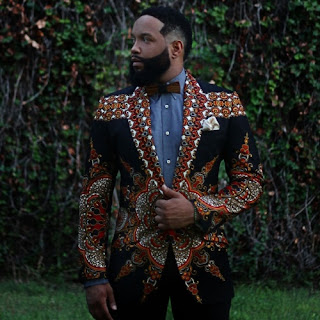
“To The Light” is a sumptuous slice of indie-soul by acclaimed artist Nuwamba. The track is beautifully arranged and features a fantastic bass line, which is complemented by a smooth, irresistible beat. It also boasts a lush string/synth arrangement; and the African-inflected percussion work and delicate guitar parts further elevate the groove. And Nuwamba’s exquisite vocals are soothing to the ears and soul. This uplifting track sets a really chill, relaxed vibe.
“To The Light” is about Nuwamba’s personal spiritual growth and journey–and the recognition of the blessings in his life and the pressures of these blessings coming too fast. In an interview with Mundane Magazine, he discussed the song and what he hopes it will accomplish: “I hope this song announces the awakening one has, as self-awareness begins, illuminating the focus required to maintain balance in life; encompassing food and nutrition to physical health and overall wellness. Defining the clarity of light and dark the known and the unknown, obtaining all without fear and knowing they are necessary to experience a virtuous life.”
“To The Light” is a single from Nuwamba’s sophomore album Love Ase (“Ase” in Yoruba translation means “so be it” or “so shall it be”), which was released on August 6, 2021. The album is now available on all digital streaming platforms.
The Dominican-American singer-songwriter, musician and producer was born and raised in Dallas-Fort Worth, Texas. Since the early 2000s, he’s been uplifting music lovers worldwide with his unique and exciting brand of R&B and soul. His eclectic sound melds jazz, funk, R&B, Afrobeat, neo-soul, funk, Latin, indie-soul and hip-hop.
Nuwamba's gospel-singing parents' love of music was passed on to their young son. After joining the chorus in grade school, he developed a personal bond to music. By the time he was a senior in high school, he was writing songs and performing in multiple groups. At the outset of the millennium, he began traveling between Dallas and Atlanta in hopes of growing his career. He eventually linked up with Atlanta-based entrepreneur William Griggs. The two created a co-venture to release Nuwamba’s debut album Above The Water (2005) on Griggs’ imprint Chocolate Soul. The collection received high marks from music critics, and Nuwamba was named “The Best Hip Hop and R&B Artist of the year 2005” by Fort Worth Weekly.
After Nuwamba was featured on The Michael Baisden Show in 2009-10, his single “Forever” charted in The Billboard Hot 100. This gave a tremendous boost to his music career, and he soon found himself performing alongside renowned artists such as Erykah Badu, Usher, Bobby "Blue" Bland, Raheem DeVaughn, Eric Roberson, UGK, among many others; he was also featured on radio stations in Africa and Brazil. And his videos have been seen worldwide on MTV-Vevo.
In 2015, Nuwamba and his business partner Uncle Odis Johnson of Cheeky-i Productions–a leader in the indie-soul music movement–created a joint venture called BSCI Music Group (Bornsoulful/Cheekyi). Through this new company, they signed a new distribution deal with Light year/Caroline/Universal to release Nuwamba’s album Love Ase. The album has been receiving much love from fans and music publications and websites.
Nuwamba is all about spreading positivity and self-awareness through his music, hoping to uplift and inspire his listeners.
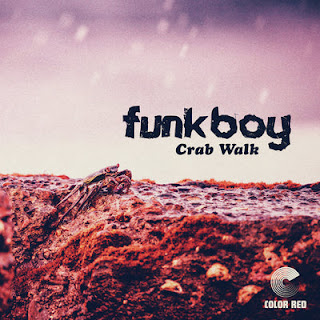
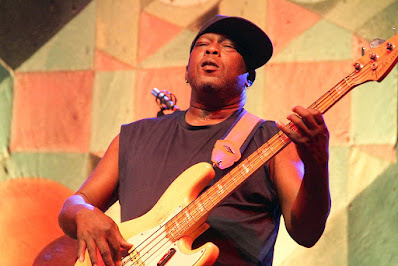
There’s funky and then there’s FUNKY! “Crab Walk” by bassist Ivan “Funkboy” Bodley definitely falls in the latter category. This is the track to turn up when you’re in the mood for some nasty uncut funk, and no watered-down substitutes will do. The groove is powered by Funkboy’s deliciously funky bass line and drummer Kenny Soule’s mammoth beat. Crispin Cioe increases the funk level considerably with his tremendous sax work (through multiple saxophones). And guitarist Moses Mo contributes some sizzling fretboard magic, while James Dower keeps the groove cookin’ with some percolating clavinet and soulful organ. And percussionist Doug Hinrichs adds more flavor to the funk with his tight playing. It’s nearly impossible not to bob your head or tap your foot when this cut comes on. “Crab Walk” was written by Funkboy and the other players on the track. Funkboy also produced it. He released this stanky deep-funk groove on Color Red Music, March 5, 2021.
Funkboy–who was born and raised in Chattanooga, Tennessee–has quite an impressive resume. The bassist and music director graduated magna cum laude from Berklee College of Music. His musical talents have taken him across the globe; he’s traveled to 29 countries and played before audiences of up to 82,000 people in settings ranging from jazz duos to 150-member symphony orchestras. Additionally, Funkboy has performed with 50 Rock and Roll Hall of Fame inductees. And he was the music director for Sam Moore (Sam & Dave), Martha Reeves and the Vandellas, the Shirelles, and the Crystals. Some of the distinguished music artists he’s performed with include Sting, Elvis Costello, the Temptations, Solomon Burke, Ben E. King, Percy Sledge, Eddie Floyd, Bo Diddley, Buster Poindexter, Paul Rodgers and Wynonna Judd.
Funkboy’s appearances include Carnegie Hall (featured soloist with the Rock Concerto), Kennedy Center Mark Twain Prize (with Cracked Ice led by Crispin Cio); 12 Broadway shows, including “Rock of Ages,“ “Spider-Man,” Hedwig and the Angry Inch,” “Kinky Boots,” “Fun Home,” and “Ain’t Too Proud–The Life and Times of the Temptations." Some of his television show appearances include “Late Night with Conan O’Brien,” “Late Late Show with Craig Ferguson”, “The Today Show,” “Emeril Live,” and “Charlie Rose.”
Last year, Funkboy published his memoir entitled Am I Famous Yet?: Memoir of a Working-Class Rock Star. Bass legend Stanley Clarke wrote the book’s foreword. It’s available at Amazon.
Funkboy also gives virtual online bass lessons via Zoom, Skype, Facebook Messenger, Facetime, WhatsApp, or any video chat app of your choice. Visit his website to learn more.
The Beatles working on Let It Be album at Apple's basement studio
Peter Jackson’s documentary series The Beatles: Get Back is a fascinating behind-the-scenes chronicle of the Beatles’ Let It Be recording sessions, which culminated in their historic rooftop concert on January 30, 1969. The three-part series offers a rare glimpse inside the Beatles’ creative process in the studio–giving viewers an intimate fly-on-the-wall perspective of the band’s interactions during those sessions. This nearly eight-hour docuseries is a true godsend for Beatles fans, providing a treasure trove of information, performances, revelations, never-before-seen footage and other interesting tidbits about the groundbreaking quartet.
Jackson–the three-time Oscar-winning director of The Lord of the Rings trilogy–spent four years editing and restoring more than 60 hours of previously unseen film footage and over 150 hours of unheard audio footage for The Beatles: Get Back. The docuseries also features hundreds of previously unpublished photographs that were meticulously restored by Jackson and his team. All of the archival film and audio material for the docuseries was culled from the copious footage that director Michael Lindsay-Hogg shot for his 80-minute Beatles documentary film Let It Be, released in 1970. Jackson has said that The Beatles: Get Back is essentially “a documentary about a documentary.”
The documentary series kicks off with an exhilarating eight-minute montage of the Beatles’ meteoric rise from scruffy working-class Liverpool lads to global superstars. It’s truly inspiring to see these four young musicians’ incredible ascension from their very humble beginnings to becoming a cultural phenomenon that altered the landscape of popular music.
The docuseries covers every stage of the Let It Be recording sessions, giving viewers a detailed and comprehensive look at the entire process. Paul McCartney had the idea of taking a back-to-basics approach in making the album. He thought it would be a good way to revitalize the band, which had been going through a rough patch at the time–a lot of infighting and division among the members. The idea was to keep things as organic and unadorned as possible. There would be no overdubs or fancy studio tricks or gimmicks, just the four of them jamming and creating together like they did back in their early days. They would record all their tracks together as a unit with no parts added later. And in keeping with the returning-to-their-roots theme, they would perform their new songs from Let It Be live in front of an audience. This performance would be particularly significant because the band hadn’t put on a live concert in nearly three years.
The original idea was to film the Beatles’ rehearsal footage for Let It Be, which would be edited into a short television documentary. And the documentary would be used to promote the main TV special in which the Beatles would perform songs from Let It Be in front of an audience. The band tapped Michael Lindsay-Hogg to film and direct the TV documentary and concert. He previously directed the “Hey Jude” and “Revolution” promos for the band that were aired on the television show “Frost on Saturday” in 1968. Lindsay-Hogg also directed the clips for the Beatles’ songs “Rain” and “Paperback Writer” back in 1966.
The Let It Be sessions began on January 2, 1969 at Twickenham Film Studios in West London. Lindsay-Hogg had a film crew in place on the soundstage where the Beatles were working. The band was under a tight deadline and was tasked with writing and arranging 14 new songs that they’ll record live before an audience in two weeks. In a few weeks, Ringo Starr was scheduled to start shooting the satirical black comedy The Magic Christian, which he was co-starring with Peter Sellers. So the pressure was on.
The sessions got off to a rocky start. The atmosphere in the studio was fraught with tension and just an overall listlessness. They all looked like they’d rather be somewhere else. Things got particularly testy between Paul and George Harrison at one point regarding a guitar part that George was playing on Paul’s song “Two Of Us.” George wasn’t playing the part exactly how Paul wanted; he felt that Paul was being too controlling and should just let him feel the part out in his own way. And on top of that, John Lennon seemed distant and disengaged from the process during much of those early sessions. He appeared to be much more focused on his ever-present companion Yoko Ono than on the album, and he was also battling heroin addiction at the time. Ringo was pretty much just laying in the cut, not saying too much, just patiently sitting behind his drum kit waiting for his bandmates to get it together.
It got so bad at Twickenham that George quit the band seven days into the sessions only to return five days later. His abrupt exit was attributed to several things: He felt that Paul and John were often dismissive of his songwriting contributions and that their songs always took precedence over his. He was also growing tired of Paul's bossy ways and micromanaging in the studio; additionally, George was annoyed by Yoko’s constant presence at the sessions. In an interview for The Beatles Anthology project, he summed up his reasons for leaving the band: “I thought what’s the point of this? I’m quite capable of being relatively happy on my own, and I’m not happy in this situation. I’m getting out of here.” In a sit-down among the band members, John and Paul acknowledged their mistakes and apologized to George for minimizing his songwriting contributions and sometimes making him feel ostracized; they eventually convinced him to rejoin the band.
One of the most poignant moments of The Beatles: Get Back comes when Paul, Ringo, Lindsay-Hogg and others at Twickenham are discussing the future of the band and the Let It Be documentary/TV concert project. This was the day after George had walked out of the session. Also, John was missing in action and couldn’t be reached. Paul initially tried to lighten the mood by joking around a bit, but his demeanor suddenly changed as the reality of the situation began to sink in. With tears welling up in his eyes, he said in a shaky voice, “And then there were two,” referring to himself and Ringo as being the only remaining Beatles. Paul’s sad and eerily prophetic statement showed that the Beatles still meant a lot to him, and that he viewed them not as just bandmates but as brothers. Despite all the tension and acrimony, the band still managed to get a few songs on their feet during the Twickenham sessions.
The band was forced to move the two-week deadline back because they were far from having enough songs ready within that time frame. The TV special idea had been scrapped as well as the planned live concert. However, the Beatles stuck to the back-to-basics approach of recording the album–meaning no overdubs or studio gimmicks for their tracks. Lindsay-Hogg decided to take his project in a new direction. He planned to use the footage for the Beatles’ next feature film.
The overall mood of the sessions improved considerably once the Beatles relocated to the Apple Corps headquarters following a week’s break. On January 21, they resumed work on Let It Be in the basement recording studio of the Apple Corps headquarters, located at 3 Savile Row, London. Lindsay-Hogg moved his film crew there to continue documenting the sessions. George had returned to the fold by that time, and John appeared to be much more upbeat and engaged in the process. The smaller studio had a much more cozy and intimate atmosphere than the cavernous soundstage at Twickenham.
The footage of the Apple recording sessions dispels the long-held belief that making Let It Be was a wholly miserable experience for the Beatles. After they relocated to their Apple headquarters, there was a definite shift in attitude among the band members. It appeared that they made a concerted effort to leave all that negativity at Twickenham behind them and start fresh. The spark had returned, and they were working together as a band again. One of the most important things that Jackson accomplished with the docuseries was to show that the Let It Be sessions weren’t one long acrimonious nightmare as many had believed. From what is shown, the Apple sessions were mostly positive and amicable.
The Beatles were much more productive at their new digs and looked like they were genuinely enjoying the process of creating, playing and recording. The Beatles: Get Back captures many lighthearted and funny moments from the Apple sessions. One particularly funny moment is when John and Paul perform a comical version of “Two Of Us” in a thick Scottish brogue, and then they try to one-up that version by doing one through clenched teeth. The deranged look on John's face while singing through clenched teeth is hilarious. Other funny moments include the two dancing an impromptu jitterbug together. Even the usually impassive Yoko had to smile at that spectacle. These moments show the great chemistry that John and Paul shared, even outside of creating music. The two had a similar sense of humor and would often bounce off one another with clever quips and gibes. John’s dry, sardonic humor would often have Paul cracking up during the sessions. So it wasn’t surprising that they gelled so well as a songwriting team.
The docuseries also highlights how integral Billy Preston was to the Let It Be album. Since the Beatles wanted to record all the tracks on Let It Be without using overdubs, they needed a keyboard player to perform the keyboard parts while they played their primary instruments. Preston dropped by the sessions one day just to say hello, and John asked him if he’d like to play on their album. Preston was thrilled at the opportunity and quickly came onboard. The gifted 22-year-old musician was an old friend of the band, whom he met back in 1962 while touring with Little Richard in Hamburg, Germany. The Beatles were Little Richard’s opening act on his Hamburg dates.
Bringing Preston onboard was perhaps the wisest decision the band made during the Let it Be sessions. He provided that missing ingredient that they needed all along but didn’t realize it. He brought a whole new energy to the sessions. He boosted the mood with his enthusiasm, great musical talent and infectious personality. And he infused some church into their tracks with his gospel-inflected playing. The simultaneously amazed and pleased expression on Paul’s face when Preston serves up an extra-soulful keyboard part on “I've Got a Feeling” is priceless. “You've given us a lift, Bill,” an appreciative John told Preston after he accompanied the band on “Don’t Let Me Down.” “We’ve been at this for days.” In all, Preston played on seven tracks on the Let It Be album and performed with the band for their iconic rooftop concert. Also, he was the only non-Beatle to ever be given credit on a Beatles song for his scorching electric piano work on their smash “Get Back.” The single is credited as “The Beatles with Billy Preston.” He was often dubbed the “Fifth Beatle” due to his invaluable contributions to the Let It Be album.
Another great thing about Jackson’s docuseries is that the viewer gets a close look at the Beatles’ songwriting process in the studio. For instance, it tracks the evolution of Paul’s song “Get Back” from a seedling of an idea to the classic that we all know today. It's truly amazing to witness the genesis of the song with Paul strumming on his bass, tapping his foot, and softly humming to himself with George and Ringo looking on. It’s clear that they were familiar with Paul’s songwriting process, and they just patiently gave him his space to work out the song in his head. They eventually started playing along as the song slowly began to take shape.
The Apple sessions were going so well that the band had a change of heart about not doing a concert and decided to do one after all. Now all they had to do was decide on a venue. They wanted to do something simple without a lot of fanfare or preplanning. They ultimately decided to do the concert on the rooftop of the Apple Corps headquarters. They held the concert on Thursday, January 30. It kicked off at 12:30 p.m. The setlist for the 42-minute performance was “Get Back,” “Don’t Let Me Down,” “I’ve Got a Feeling,” “One After 909,” “Dig a Pony,” and “God Save the Queen.” They performed “Get Back” three times, with the last take interrupted by the police; they performed two takes of “Don’t Let Me Down” and two takes of “I've Got a Feeling.”
Lindsay-Hogg had five cameras positioned on the rooftop and one camera placed on the roof of the building across the street. Three cameras were placed at ground level outside the building to capture public reaction to the concert; and one was hidden in the reception lobby of the Apple building. The performance was recorded onto two eight-track machines in Apple’s basement studio by producer George Martin, engineer Glyn Johns and tape operator Alan Parsons. They monitored the concert via a closed-circuit system.
At 12:44 p.m., the police arrived at the Apple headquarters due to 30 noise complaints. The receptionist and doorman did their best to stall the police as long as possible. Split-screen is creatively used to show both the band performing and the crowd’s reaction at street level below. The juxtaposition of the band playing their souls out on the roof and people’s stunned reaction on the street below is quite exhilarating and enhances the excitement level of the entire event.
The concert was a great climax to the Let It Be project. The Beatles and Preston delivered a thrilling live performance that was filled with tons of soul. It fit perfectly with the band’s returning-to-their-roots theme; and the fact the police had to be called to shut it down captured the rebellious, outlaw spirit of rock and roll in its purest form. This was the Beatles’ last live performance, and they couldn’t have chosen a better way to give their final bow to the public. Lindsay-Hogg used the footage from the sessions and the rooftop concert for his 1970 Let It Be documentary.
The Beatles: Get Back was directed and produced by Peter Jackson. It was co-produced by Paul McCartney, Ringo Starr, Yoko Ono and Olivia Harrison–George Harrison’s widow. It’s worth a viewing even for those who aren’t big Beatles fans; and that’s just not due to its great cultural and historical significance, but also because it's such a well-made and well-researched piece. The acclaimed documentary series has been nominated for several prestigious film awards. And it currently has a 94% fresh score rating at American review-aggregation website Rotten Tomatoes. It has won Rotten Tomatoes’ Golden Tomato Award for Best Docuseries. It also has a very impressive 9.1 out of 10 user rating at IMDB.
The Beatles: Get Back is streaming exclusively on Disney + streaming service. The first episode premiered on Thursday, November 25, 2021.
Here's a cool little montage of the Beatles' Let It Be sessions set to their track "Get Back."
Influential bassist and producer Robbie Shakespeare died on Wednesday following complications from kidney and liver transplants he underwent a year ago. He was 68.
Born Robert Warren Dale Shakespeare in East Kingston, Jamaica, in 1953, the two-time Grammy-winning musician was half of the iconic rhythm duo Sly and Robbie (aka the Riddim Twins); the other half of the duo was drummer Sly Dunbar, who also hailed from Kingston. The two met in 1972 but didn’t team up as a music duo until three years later. The talented pair made a name for themselves as one of the tightest rhythm sections in reggae and dancehall music–and are credited with revolutionizing the sound of those genres. Their great musical talent and stellar production skills made them highly sought-after session players. The prolific duo has played on or produced an estimated 200,000 recordings, many of which were released on their own label Taxi Records. They have worked with reggae giants such as Bob Marley, Jimmy Cliff, Peter Tosh, Gregory Isaacs and Black Uhuru. Sly and Robbie are without question one of the most influential production duos and rhythm sections in the history of reggae music.
The versatile musicians also worked with prominent artists in other genres, including Grace Jones, the Rolling Stones, Joe Cocker, James Brown, Bob Dylan, Sinead O’Connor, Sting, Bootsy Collins, Afrika Bambaataa, Herbie Hancock, Madonna, Mick Jagger, KRS-One and Britney Spears.
In addition to recordings for other artists, Sly and Robbie released dozens of albums of their own, including superb, ambitious works such as Language Barrier, Rhythm Killers and Blackwood Dub.
Shakespeare has definitely made his mark in the bass world. His fluid, distinctive playing style has influenced legions of bassists. He lives in the pocket when he plays, which is a key part of great bass playing. The musician is considered by many as reggae music’s greatest bass player. And last year, he placed at number 17 on Rolling Stone’s list of “The 50 Greatest Bass Players of All Time.” A well-deserved honor for the musician, who will forever live on through the many recordings that he blessed with his immense talent.
"Make 'Em Move," a track from Sly and Robbie's 1985 album Language Barrier
"Bank Job," a track from Sly and Robbie's 1987 album Rhythm Killers
Sly and Robbie performing live with Black Uhuru in 1981
Sly and Robbie provided the funky riddim for Grace Jones' 1981 hit "Pull Up to the Bumper."
Singer-songwriter, musician and producer Peter Brown had one of the hottest club jams of 1978 with his hit “Dance With Me.” That was no small feat considering all the strong disco releases that year, including smashes by Donna Summer and Chic, not to mention the Saturday Night Fever juggernaut that was sweeping the country. Brown’s combustible disco track had folks burning up dance floors from LA to Manhattan and could be heard booming out of car stereos everywhere. The propulsive bassline drives this funky dance groove, which features slinky guitar riffs, elegant strings, percolating keyboards and a smokin’ beat. Brown delivers a rousing vocal performance and receives some extra-soulful vocal support from the “Clean Up Woman” herself, Betty Wright. Pat Hurley and Wildflower provide additional background vocals. The track is further elevated by Robert Rans’ smooth piano solo.
The musicianship on this cut is topflight, with the players keeping the groove super-tight and snug in the pocket. And Cory Wade’s crisp production enhances the track considerably. In addition to lead vocals, Brown played drums and keyboards, with Tom Dziallo on bass and guitar. Bert Dovo is responsible for the superb string arrangement; and members of the New York Philharmonic string section contributed their talents.
“Dance With Me” was written by Brown and musician/composer Robert Rans. It was a single from Brown’s debut album, A Fantasy Love Affair (December 1977), which was released on Drive Records, a subsidiary of T.K. Records. It had a strong showing on the U.S. R&B, pop and dance single charts—#5, #8 and #4, respectively. And it also performed well in other parts of the world, peaking at #9 on the top singles chart in Canada and #3 in New Zealand. The fantastic “Do Ya Wanna Get Funky With Me” was another big dance hit from A Fantasy Love Affair. The song peaked at #18 on the U.S. pop singles chart, #3 on the R&B singles chart, and #9 on the dance chart. And it charted at #43 in the UK. It has sold more than a million copies.
“Dance With Me” garnered Brown a Grammy nomination for Best Male R&B Vocal Performance at the 21st Annual Grammy Awards, which aired on February 15, 1979. And Billboard named him the #1 new male album artist for its 1978 Year End #1 Awards.
“Dance With Me” has been sampled on 21 songs, including “Got to Keep On” (The Chemical Brothers), “Starksy & Hutch” (LL Cool J, featuring Busta Rhymes) and “Give It Here” (Def Jef). Also, the song was featured on the following film soundtracks: Summer of Sam (1999), Donnie Brasco (1997) and Yesterday’s Hero (1979).
Brown enjoyed a highly successful recording career in dance music, landing a total of seven Top Ten Billboard club hits. In addition to his own recordings, he wrote tracks for prominent artists such as Madonna and Agnetha Fältskog from superstar pop group ABBA. Brown and Rans cowrote Madonna’s megahit “Material Girl.” And Brown and singer Pat Hurley cowrote “Maybe It Was Magic,” a track from Fältskog’s solo album I Stand Alone, which topped the album charts in Sweden.
A severe case of tinnitus forced Brown to exit the music business in the late ‘80s. He subsequently entered the fields of architecture and design. In 2018, Brown made a return to music with the release of his album Boom. It was his first album release in more than 30 years. The 11-track collection offers a stellar mix of R&B, dance and electronic grooves, showing that Brown hadn’t lost his touch during his long absence from the music scene.
Here's a cool clip of Peter Brown in the studio putting together "Dance With Me."
No band could musically convey sheer joy like Earth, Wind & Fire. Their exuberant R&B/pop hit “Sing a Song” is a prime example. The track is overflowing with good vibes and positive energy. It sounds like a carefree outing to the park or beach on a beautiful summer day. The song is about the therapeutic power of music and how it can lift people’s spirits when they’re feeling down. It boasts a stellar arrangement with bright horn lines, energetic guitar riffs and groovin’ bass. And Maurice White and Philip Bailey elevate the track with their vibrant vocals. The track also has a sunny, infectious chorus. This is definitely the cut to bump when you’re having a bad day, but it’s also great to listen to when you’re already in good spirits.
“Sing a Song” was written by White and EWF guitarist Al McKay. It was a studio track from Earth, Wind & Fire’s triple-platinum double-live album Gratitude, which was released on November 11, 1975. The song spent two weeks atop Billboard's R&B singles chart and peaked at #5 on Billboard’s Hot 100 pop chart. The gorgeous ballad “Can’t Hide Love,” another studio cut from the album, had an impressive showing on the Billboard’s R&B singles chart, peaking at #11.
Gratitude was released on Columbia Records, and it was produced by Maurice White, Charles Stepney and Joe Wissert (live shows). The full band lineup for the album was Verdine White (bass, vocals, percussion), Larry Dunn (piano, organ, Moog synthesizer), Fred White (drums, percussion), Johnny Graham (guitar), Andrew Woolfolk (saxophone, percussion), Philip Bailey (vocals, congas, percussion), Maurice White (vocals, kalimba, drums, timbales, producer), Don Myrick (saxophone), Al McKay (guitar, percussion), Louis Satterfield (trombone), Ralph Johnson (drums, percussion) and Michael Harris (trumpet).
“Sing a Song” was included on the following film soundtracks: Something’s Gotta Give, Think Like a Man, Radio Arrow, The Color of Friendship and the video game For All Mankind Time Capsule. Also, it was sampled on the song “Hey Goldmember,” which Beyoncé sang in the 2002 spy action comedy Austin Powers in Goldmember.
In 1973, Brooklyn groove outfit Mandrill scored their third hit with the eruptive funk jam “Hang Loose.” The dynamic track showcases the band's formidable musicianship. Fudgie Kae ignites the groove with a killer bass line, and the badass horn section serves up some potent brass funk. The kinetic percussion work and tight rhythm guitar riffs significantly enhance the song's groove quotient. Things shift from urgent hard-hitting funk to smoldering Latin jazz-rock on the instrumental bridge, which features a superb solo from guitarist Omar Mesa. Not to be outdone, Claude “Coffee” Cave lets loose with a scorching organ solo when the band returns to the main groove.
The song touches on the daily struggle for survival in America, especially for those who live in distressed urban areas, and how this constant struggle places people at odds with one another, which begets violence and other crimes among those in the community. “Hang Loose” calls for unity and peace and for people to respect one another.
“Hang Loose,” written by Cave, was a single from Mandrill’s third album Composite Truth (1973), released on Polydor Records. The song peaked at #25 on Billboard’s R&B single chart and #83 on Billboard’s Hot 100. The album also contains the band’s biggest hit “Fencewalk” (#19 R&B chart, #52 pop chart). The collection was produced by Alfred V. Brown and Mandrill.
The full band lineup for Composite Truth was Frederick “Fudgie Kae” Solomon (bass, acoustic guitar, percussion, vocals); Neftali Santiago (drums, vocals); Omar Mesa (lead guitar, percussion, vocals); Claude “Coffee” Cave (keyboards, vibraphone, percussion, vocals); Dr. Ricardo Wilson, aka “Doc Ric” (tenor saxophone, alto saxophone, percussion, vocals), Carlos Wilson (trombone, flute, alto saxophone, guitar, timbales, drums, percussion, vocals); Louis “Sweet Lou” Wilson (trumpet, congas, percussion, vocals).